Book Categories:

Wait, don't go!
Before you leave, we have a special offer just for you!
Get 20% off your next purchase.

Book Categories:






Before you leave, we have a special offer just for you!
Get 20% off your next purchase.

Share:
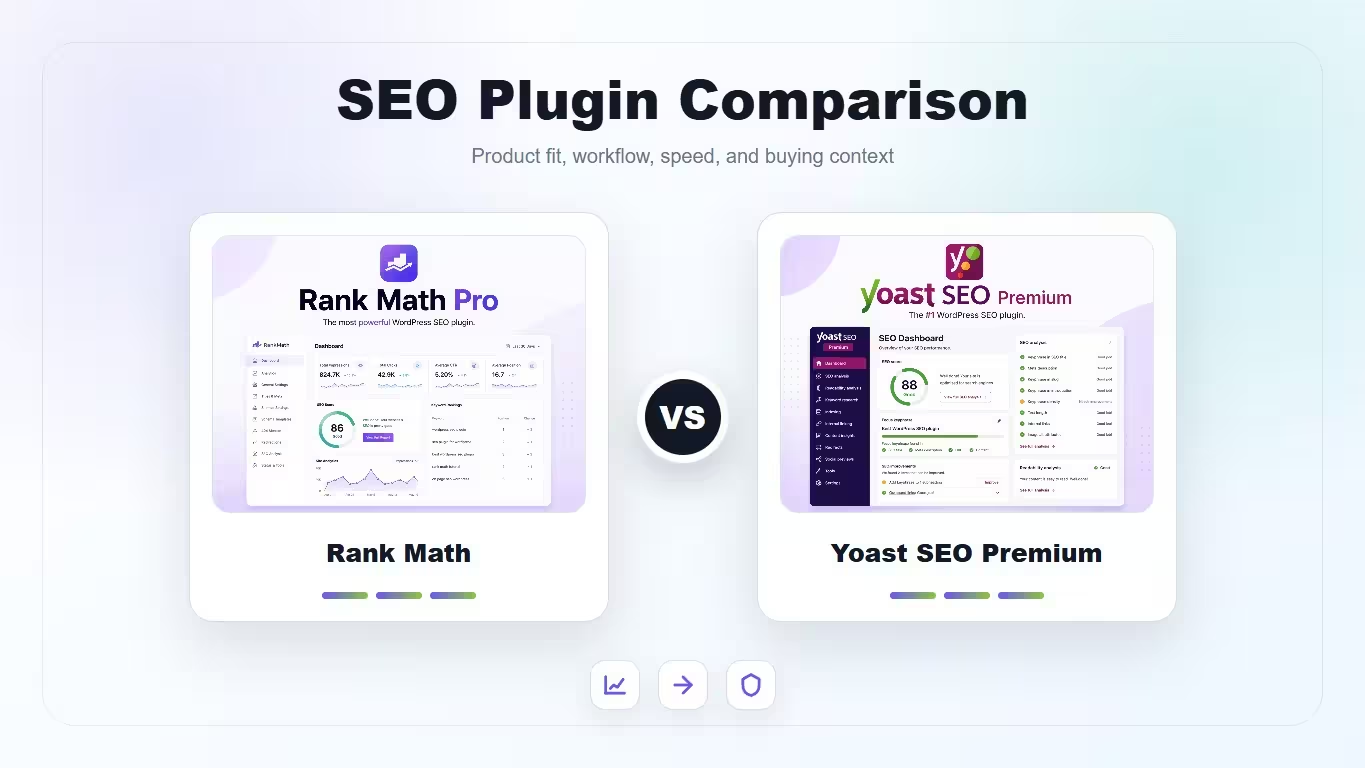
Rank Math and Yoast are both strong WordPress SEO plugins, but they are not built for exactly the same type of user. Rank Math feels more like a feature-rich SEO control panel. Yoast feels more like an editorial assistant that keeps writers and site owners on a familiar publishing track.
The right choice depends on your workflow. If you want more built-in controls, schema options, rank tracking, and value in one plugin, Rank Math is usually the stronger fit. If you want a mature, familiar writing workflow with readability guidance, internal linking suggestions, and a long documentation history, Yoast is still very hard to dismiss.
| Plugin | Best fit | Why choose it | Product |
|---|---|---|---|
| Rank Math | Hands-on site owners who want more SEO controls in one plugin. | Better fit for feature depth, schema control, rank tracking, and value-focused personal site workflows. | View |
| Yoast SEO Premium | Writers, editors, and teams that want a familiar publishing workflow. | Better fit for readability guidance, editorial guardrails, mature documentation, and client-friendly SEO checks. | View |
Use this as a fast reading guide. Higher scores mean a stronger fit for that specific workflow, not an absolute product winner.
| Criteria | Rank Math | Yoast SEO Premium |
|---|---|---|
| Feature depth | 9/10 | 7/10 |
| Editorial workflow | 7/10 | 9/10 |
| Schema control | 9/10 | 7/10 |
| Learning curve | 7/10 | 9/10 |
| Value for personal sites | 9/10 | 7/10 |
Short version: choose Rank Math if you want more SEO tooling in one place. Choose Yoast if your priority is a dependable editorial workflow that writers and clients can understand quickly.
| Feature area | Rank Math | Yoast SEO Premium | Practical takeaway |
|---|---|---|---|
| SEO titles and meta descriptions | Yes | Yes | Both handle the core metadata job well. |
| Content analysis | Strong SEO scoring and keyword controls | Strong SEO and readability checks | Rank Math leans technical; Yoast leans editorial. |
| Schema | Powerful schema generator in paid plans | Schema support and structured data integration | Rank Math is usually more attractive for advanced schema workflows. |
| Redirects | Available in its broader SEO toolkit | Premium includes redirect manager | Both can work; check your exact plan and migration needs. |
| Internal links | AI Link Genius and automated linking features promoted in paid plans | Premium includes internal linking suggestions | Rank Math is more automation-heavy; Yoast is more writing-assistant oriented. |
| Rank tracking | Paid plans include keyword tracking limits | Not the main reason to choose Yoast | Rank Math has the edge for built-in rank monitoring. |
| Installation base | 4+ million active installs on WordPress.org | 10+ million active installs on WordPress.org | Yoast has the larger installed base; Rank Math has grown quickly. |
Use these product cards to check the current WPKiosk product pages and live WooCommerce prices.
Yoast is usually easier for true beginners because its workflow is familiar: write the post, check SEO feedback, check readability feedback, improve obvious issues, and publish. That makes it easier to teach to writers and clients.
Rank Math is still beginner-friendly, but it exposes more options. For some users, that feels powerful. For others, it creates more decisions than they want to make during setup.
If you are building a personal site and enjoy tuning settings, Rank Math may feel better. If you are handing a site to a client or editorial team, Yoast may be easier to standardize.
Rank Math has the edge if schema control is a major part of your SEO workflow. Its paid plans promote a powerful schema generator, templates, and advanced structured data features.
Yoast also supports structured data and helps search engines understand your site, but users who want more manual schema control often prefer Rank Math. For most simple blogs, either plugin can handle the basics. For content-heavy, review-heavy, or local/business sites, schema requirements should be checked carefully before choosing.
Yoast is usually better for content teams because its feedback system is easy to explain. Writers understand readability checks. Editors understand internal linking suggestions. Site owners understand redirects and orphaned content warnings.
Rank Math can work well for content teams too, especially when the person managing SEO is more technical. But if the team mainly needs a simple publishing workflow, Yoast has the advantage.
Rank Math usually wins on value for users who want many SEO features in one plugin. The PRO plan is priced lower than Yoast Premium and includes a broad set of tools for personal websites.
Yoast is more expensive, but price is not the only factor. If Yoast saves editorial time, reduces mistakes, and gives a team a consistent process, the higher annual cost may still make sense.
Switch only if you have a clear reason. Good reasons include wanting more schema control, rank tracking, feature consolidation, or a lower-cost pro setup. Rank Math supports importing from Yoast, which makes migration more realistic.
Do not switch just because another plugin has a longer feature list. Before migrating, back up your site, export SEO settings if possible, check redirects, test metadata, inspect schema output, and verify your XML sitemap in Google Search Console.
Choose Rank Math if you want more SEO controls, stronger value, schema flexibility, and a feature-rich plugin that can grow with your site.
Choose Yoast SEO Premium if you want a proven editorial workflow, readability guidance, mature documentation, and a plugin that writers and clients can understand quickly.
Neither plugin is magic. The best SEO plugin is the one your site will use consistently while publishing useful content, maintaining clean technical SEO, and building strong internal links.
Rank Math is better if you want more built-in SEO controls, schema options, and value. Yoast is better if you want a familiar editorial workflow and readability guidance.
No. Use one main SEO plugin at a time. Running both can create duplicate metadata, conflicting sitemaps, and schema issues.
Yoast is usually easier for beginners and content teams. Rank Math is still approachable, but it gives users more options to configure.
Switching itself does not have to hurt rankings, but mistakes during migration can. Check metadata, redirects, schema, canonical URLs, and sitemaps after switching.
It depends on your setup. Rank Math offers broad SEO features in its plans, while Yoast sells WooCommerce SEO separately. Check your store’s product schema, breadcrumbs, sitemap, and metadata needs before choosing.